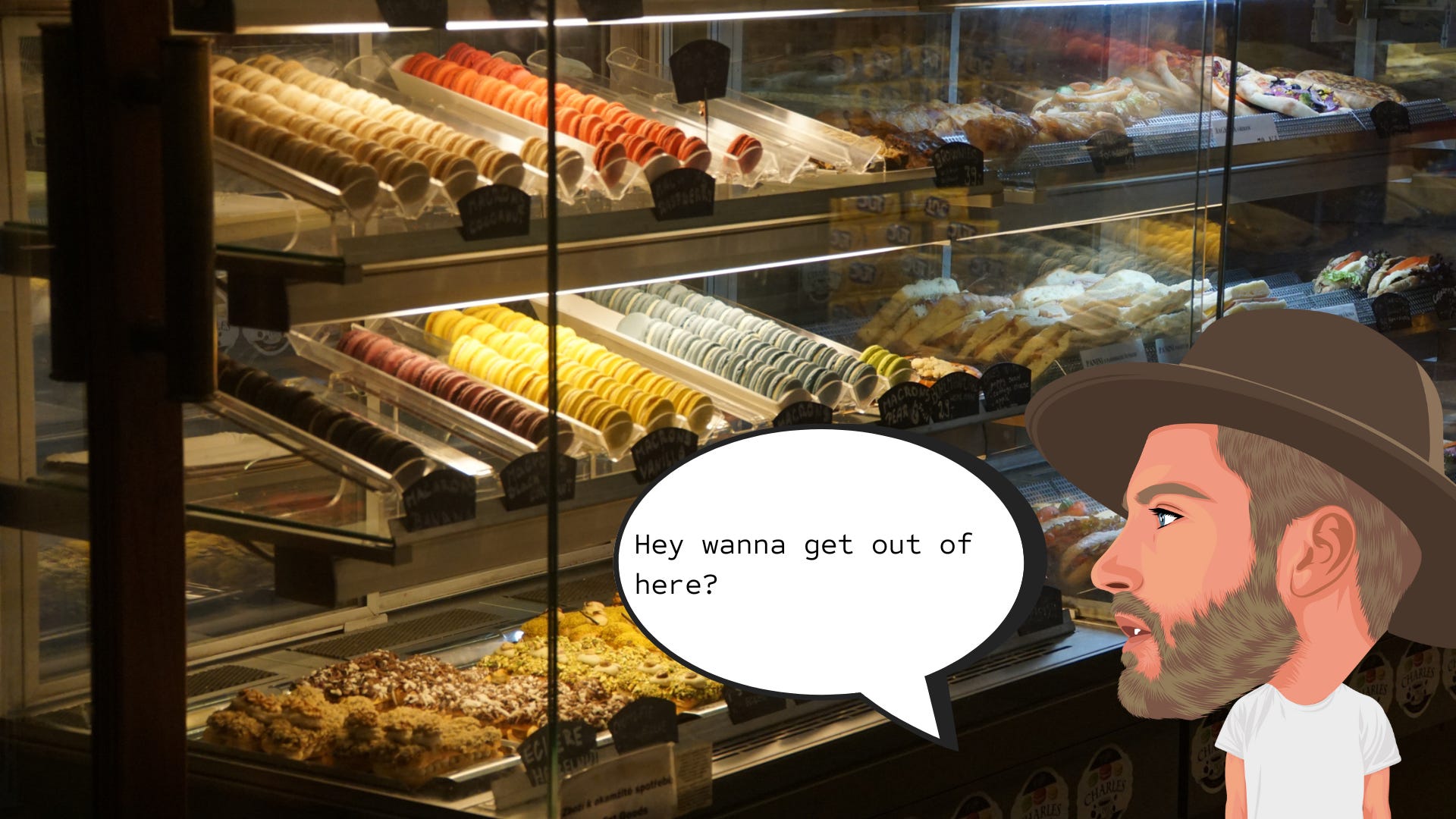
Let's get the suspense out of the way—if you want to be fast on a bike or if happiness is important to you, you should never consider Whole 30.
From a personal perspective, Whole 30 will make you hate everything for 30 days.
From a performance perspective, your fitness will grind to a halt. Any effort within grenade distance of requiring carbohydrates feels like you're being dragged behind a Prius through a manure field.
Whole 30 opens up a carbohydrate-shaped hole in your heart and asks you to fill it with bananas, apples, and potatoes while only grudgingly allowing you to supplement your desperate requests for glycogen with 'Whole 30 allowed' (but frowned upon) energy bars with simple ingredients. Technically, this is both allowed and helps beat back cravings for processed sugars, but it never really satisfies, succeeding primarily in generating death-threat fantasies for banana producers and the inventor of Lara Bars.
Here's the problem: Whole 30 is for everyday people, not cyclists training 15+ hours a week, often at intensities that vaporize glycogen stores and jack the nervous systems.
Think about it. What does cycling do to your metabolism? It's incendiary! With only a few hours of effort, cyclists will burn as much energy as most people do in a day. Internally, cyclists are bonfires.
If you want a big bonfire, you can hand-select different types of wood due to their burning properties, and that'll have a modest effect on the quality of your bonfire.
OR YOU CAN DUMP A SHIT LOAD OF WOOD ON THE FIRE AND DOUSE IT IN KEROSENE!!!
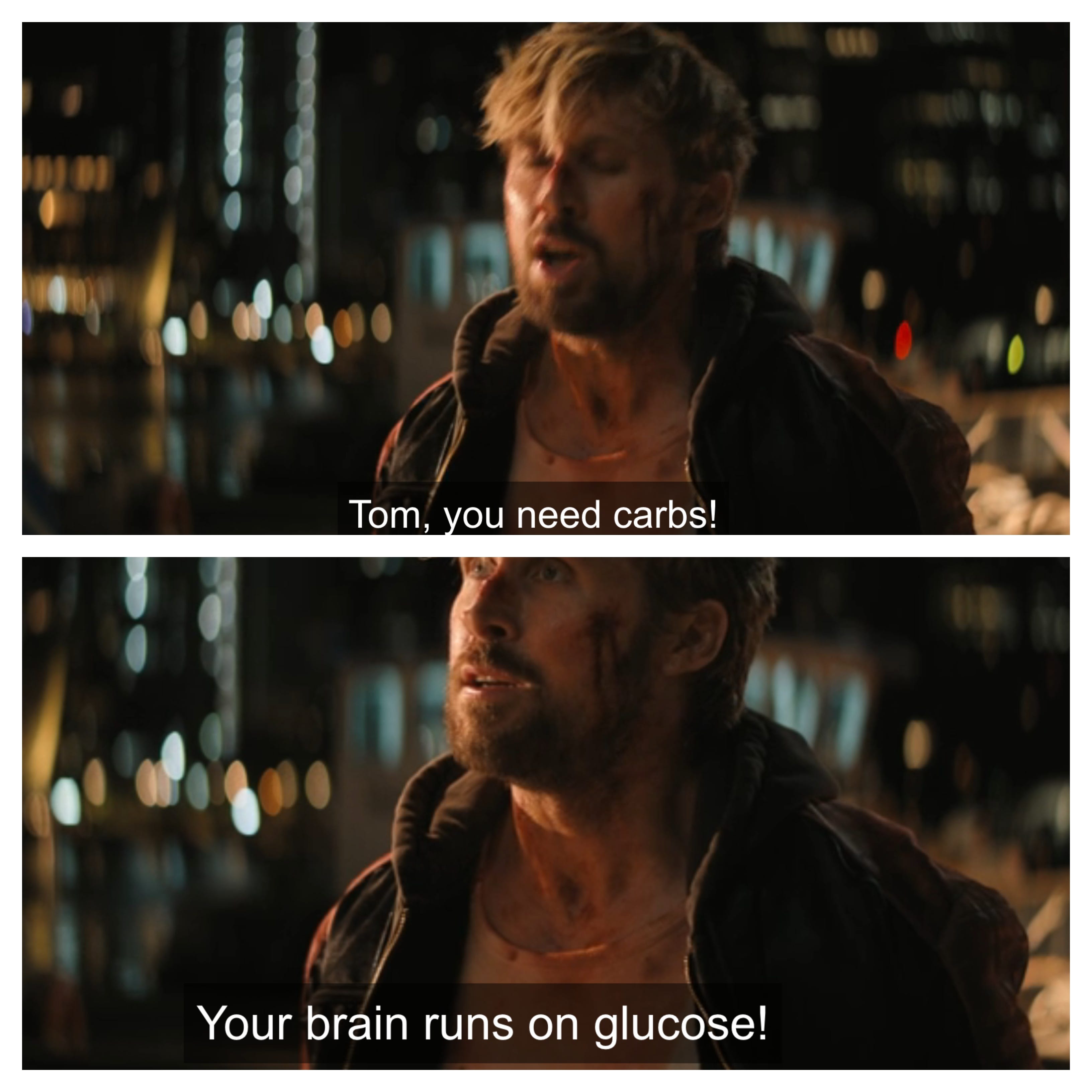
Likewise, if you're training a lot, and sometimes intensely, you don't need to carefully fuel yourself with small portions of perfectly sourced whole foods - you gotta get dirty.
You gotta shamelessly pick the foods with enough energy and carbohydrates in the most appetizing and satisfying form possible to support the demands you're placing on your body. I'm not talking about bananas. I'm talking about cinnamon rolls, sugar buns, snickers, ice cream bars, and even double-stuffed Oreo rice cakes dunked in coconut milk.
ENERGY. CARBS. These are the things a cyclist relies on to prepare, sustain, and adapt to a proper training load, not five-pound potato bags roasted in an air fryer with the flavor nudged toward tolerable by several grams of salt and a modest dollop of guacamole.
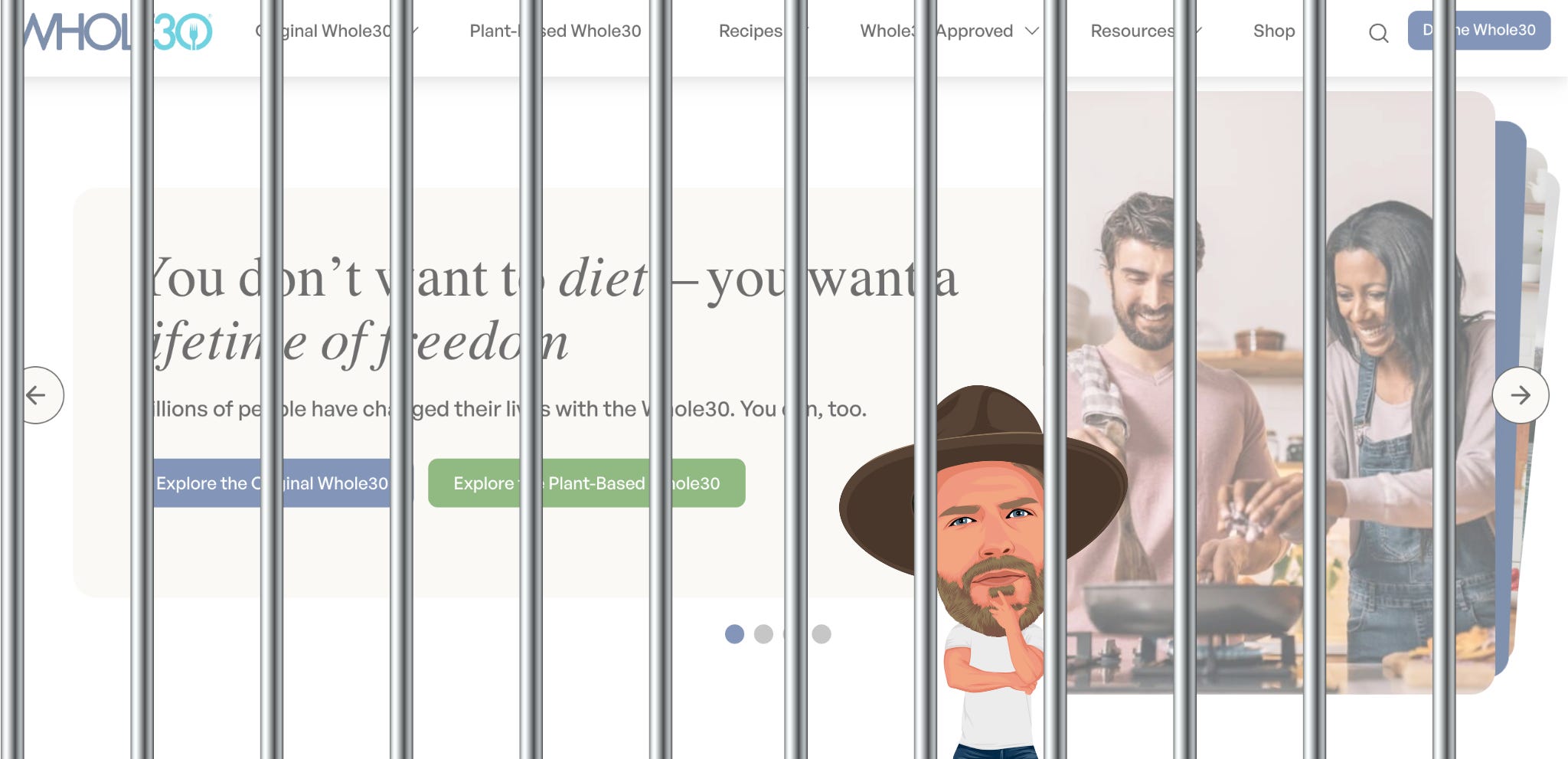
So what's the deal with Whole 30? Whole 30 is a hard reset: thirty days without sugar, grains, dairy, alcohol, or legumes. Eat meat, vegetables, fruit, nuts, and healthy fats. That's it. No sneaky additives, no processed junk, unless you're super active and can't stand the sight of another banana or potato, then look for 'Whole 30 adjacent' alternatives.
Why try it? Because you burn it all (your happiness) down by rejecting everything you enjoy eating for thirty days, as you gradually reintroduce what you used to eat, you'll easily notice what serves you and what doesn't. For example, when you' add gluten, you'll immediately see if adding back in gluten makes you feel better or worse.
Why did I do it? My wife. After the holidays, she said, "Hey, the holidays were fun, but do you feel like hating everything for four weeks?" And I said, "Sure, I never liked myself anyway, so let's make January even worse than usual!"
How did it go? Did you feel like a self-care goddess? Did your skin sing? Did you liver enjoy the break from Miller? Did you learn to love flavorless 'whole foods'? Did it open you up to loving your children?
No, it didn't. If anything, I became uglier, mildly diabetic, surly, and even radicalized. That's right—post-W30, I became a processed food truther.

People go on and on about a momentary (two weeks is not 'momentary') withdrawal as your body transitions from processed foods to whole foods, and then suddenly, you wake up one day and feel like you have 'Tiger Blood.'
Tiger Blood is the Whole 30 term for the surge of energy, mental clarity, and general feeling of invincibility that kicks in around days 16-27. It's when the body has fully adapted to burning fat for fuel, inflammation has dropped, and blood sugar swings have stabilized. Cravings are mostly gone, sleep is better, digestion is smooth, and workouts feel easier.
The name is dramatic, but the feeling is real. It's when people stop thinking about what they can't eat and start realizing how damn good they feel. If the first two weeks were a slog through sugar withdrawals and mood swings, Tiger Blood is the reward—proof that the reset worked. Supposedly, it's what life feels like when your body runs clean.
Except my body didn't, I felt ass. Like, profound, unrelenting ass.
Dinners were fine—my wife is a nasty cook—and as long as I didn't do any hard or long rides, I felt OK. Maybe even the beginning of a Tiger snarl was building in me, but when it came time to gas up on the bike, I felt emptier inside than when Alida Sorenson left me for Steven Pfeiffer at the Wausau East High School prom.
I'm honestly at a loss. I used MyFitnessPal to track my shit because I was invested in seeing how I felt varied with how I ate, but even when the macros supposedly met the theoretical demands of riding, it just didn't hit right.
I remember several instances of doing four to five-hour rides armed with a Costco-sized box of Lara Bars, eating my way through them, and still feeling like when Katie Priebe left me for Phil Hanke at the homecoming parade. The calories and calorie type should have met the ride demand and scratched a subjective itch, but no matter how many Lara Bars I ate, I was just left cold.

On January 31st at 11:59 pm, somewhere in Longmont, Colorado, a man sat in a dimly lit room in his underwear in front of a cinnamon roll he'd just removed from the microwave. When the digital numbers flashed to midnight, his fork dove into the reheated but still delicious frosting. As soon as his steamed vegetable-adjusted palate registered the baked good’s tongue signals, his heart rate leaped to the max, dislodged a bit of plaque in his veins, and he suffered a stroke, dying with a mostly uneaten cinnamon swirl on his face. He died a happy man.
While that never happened, it's not far from the truth. I really did stay up and wait to eat something with more flavor than dog food on February 1st, and while I didn't have a stroke, I just about had an orgasm. My God, it was good to eat processed, hyper-palatable, calorically dense, nutritionally bankrupt garbage again. Absence really does make the heart grow fonder.
What is there to say about the whole experience? Here's all I have:
I'm modestly pleased I made it a month.
If you want to slow down time, take care of a newborn, or start Whole 30.
Everything was worse in every aspect that counted - happiness, body composition, performance, and health.
I wish I were kidding, but it really was that awful for me. You couldn't pay me to do it again.
And yet, a quick search will reveal a few other endurance athletes who have tried it and 'swear by it,' to which I say, 'I don't believe you.'
Remember Supersize Me? The 2004 documentary about that guy who only ate McDonald's for thirty days and then gained 18 lbs, and every single one of his biomarkers was terrible, and it seemed like if he continued like this for even a few days more, he'd die.
He was an alcoholic. McDonald's didn't tank his biomarkers; his clandestine boozing did!
So whenever people tell me about their amazing Whole 30 experience, I believe them, but if you're going to do it, the key to having a good experience is NOT to train hard (or long). That's the booze in this situation.
Whole 30 is great. It's an accessible tool for evaluating one's diet and, if done methodically, gradually introducing foods to determine what serves and doesn't serve one's best health.
But if you want to pedal hard, it's Stage 4 cancer.
Slow, Mid, 38s is a reader-supported publication. To receive new posts and support my work, consider becoming a free or paid subscriber.