In the short term, your success is based on intensity; in the long term, it’s based on consistency.
I despise platitudes. If you’re not aware, platitudes are what your neighbor has standing in their yard, probably saying something to the effect of, “In this house we believe…” Platitudes sound good but are empty of meaning, like most of the conversations I used to have with my ex-girlfriends or sycophantic, unhelpful conversations with ChatGPT about all my childhood baggage.
Now, this is going to be a leap, but one platitude I’ve overheard recently came from the worst possible source imaginable, my now ex-teammate Cole Tamburri at Green Mountain Stage Race.
After having a fast, albeit sort of demoralizing time trial that all but guaranteed he didn’t have the legs to get in the top ten in the overall, he came back to our AirBnB after cooling down (instead of greeting his girlfriend who he had dragged out here who had spent every minute not answering his panicked, devastated phone calls in the kitchen, making delicious food for him like some trad wife), he put on his compression socks and paced back and forth on the main floor muttering “Just gotta take care of myself just gotta take care of myself just gotta take care of myself.”
By the time he got back, I was already several MeeLahrs deep and couldn’t really make out what he was saying, but other sources present confirmed that he was saying, "I just need to take care of myself.”
What I’m about to do gives me no pleasure, but as much as it pains me to give credit to this overanxious high-achieving soon-to-be PhD astrophysicist galaxy brain that he already doesn’t give himself, I just need to take care of myself, is, in my observation, both a seemingly superficial platitude AND the key to improving in cycling over the long haul. Ugh, yes, I’m about to ask you to hold two ideas in your head at once.
Please send $ so I can continue racing and hopefully beat Cole someday
It is Actually That Deep
What does I just need to take care of myself mean, exactly?
It means doing all the ‘little things’ that can produce dramatic and decisive results if done faithfully over a long enough time frame that the inputs are allowed to compound.
What are those little things?
Eating enough carbohydrates before, during, and after training so that you don’t just survive training, but thrive.
Going to bed at the same time every night without gazing into a screen and sleeping for at least 8 hours, if not more.
Not just following, but believing in a structured training plan that stresses the body systematically and requires discipline and restraint rather than just exercising as hard as possible a lot because it feels good or you need to drop a stranger.
Avoiding alcohol like the plague.
Hydrating well, even neurotically.
Wearing sunscreen.
Journaling every day to get feelings out of the body onto a page.
Working with a coach so they don’t have to do a thing and see the thing simultaneously.
Obsessing and performing dumb yet important little rituals, like graphic, too public mobility exercises in common areas.
General patience.
Etc.
Now, interestingly, in this case, Cole isn’t saying this little prayer over and over because he hopes the effects will manifest in months or years; he’s hoping for a performance turnaround in a few days, which is, well, probably a delusion worthy of inclusion in the DSM. In his defense, the longer the stage race, the greater the chances that doing the little things matters, because so many cyclists, even at that level, while dedicated, just can’t keep it together, can’t check off all the ‘best practices’ for a week without skipping some crucial action out of boredom or annoyance that does make a difference.
While it's easy for me to dispute the importance of the ‘taking care of myself’ platitude over a few days or a week, over months and years, there’s no question in my mind that it makes a huge difference and is, in some regard, more of a superpower than raw talent alone, especially in a sport like cycling that rewards progression in many different aspects of the sport, not just in one’s ability to pump a lot of oxygen-filled blood to working muscles.
For example, when I upgraded to Cat 1 seven years ago, Cole wasn’t even born yet. I'm just kidding—I think Cole was maybe a Cat 5 or a Cat 4, just starting his journey into cycling while also entering young adulthood and throwing his big brain around in the classroom while he hid from girls.
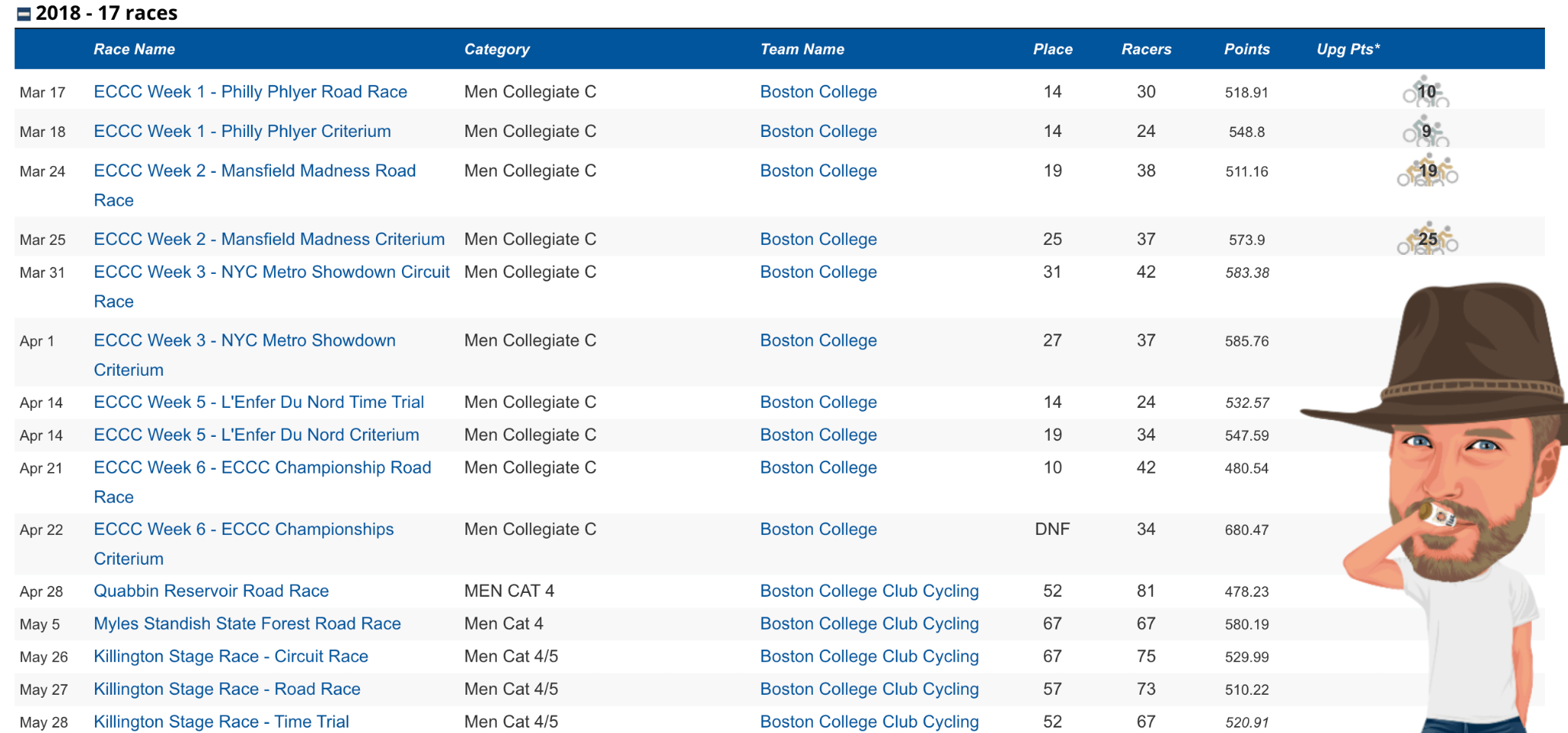
This might be insulting, but if you look at road-results.com, there’s absolutely nothing about Cole’s early career that suggests any World Tour manager was missing something. His results were garbage, the definition of mediocre; his existence in the pack only served to make other people feel better about themselves.
Most people would have ended it all after such a season, never mind enthusiastically continued pedaling hard for hours and only seeing numbers like ‘250’ show up on their screens, but Cole didn’t let his blatant lack of physical talent stop him from clocking in and laying down some work.
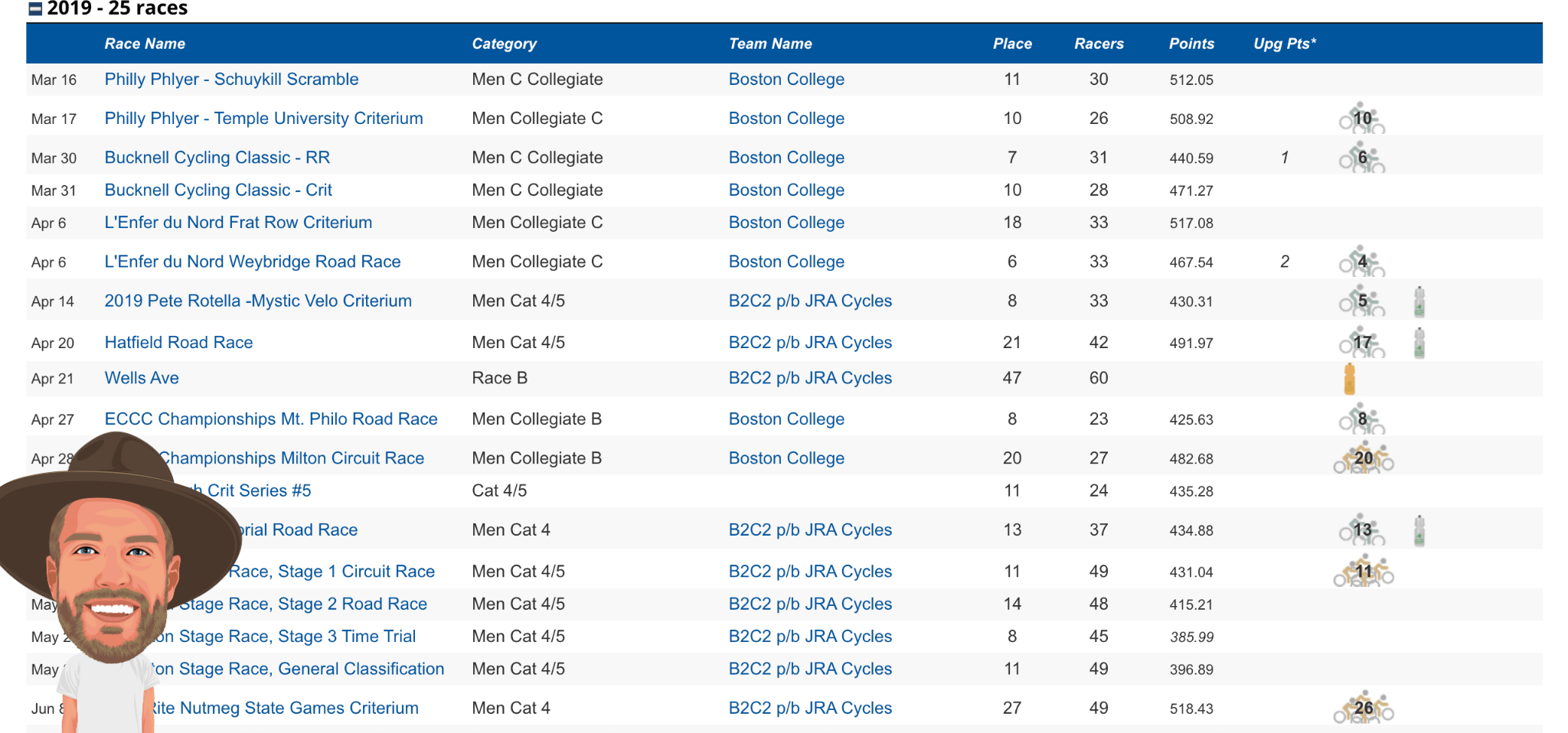
Did he dramatically turn it all around a year later and prove all his sneering haters wrong? No. It was more grotesque, unforgivably poor performances, even in the CAT 4s. Honestly, if you look at these years, it’s shocking he didn’t quit and take up something more rewarding.
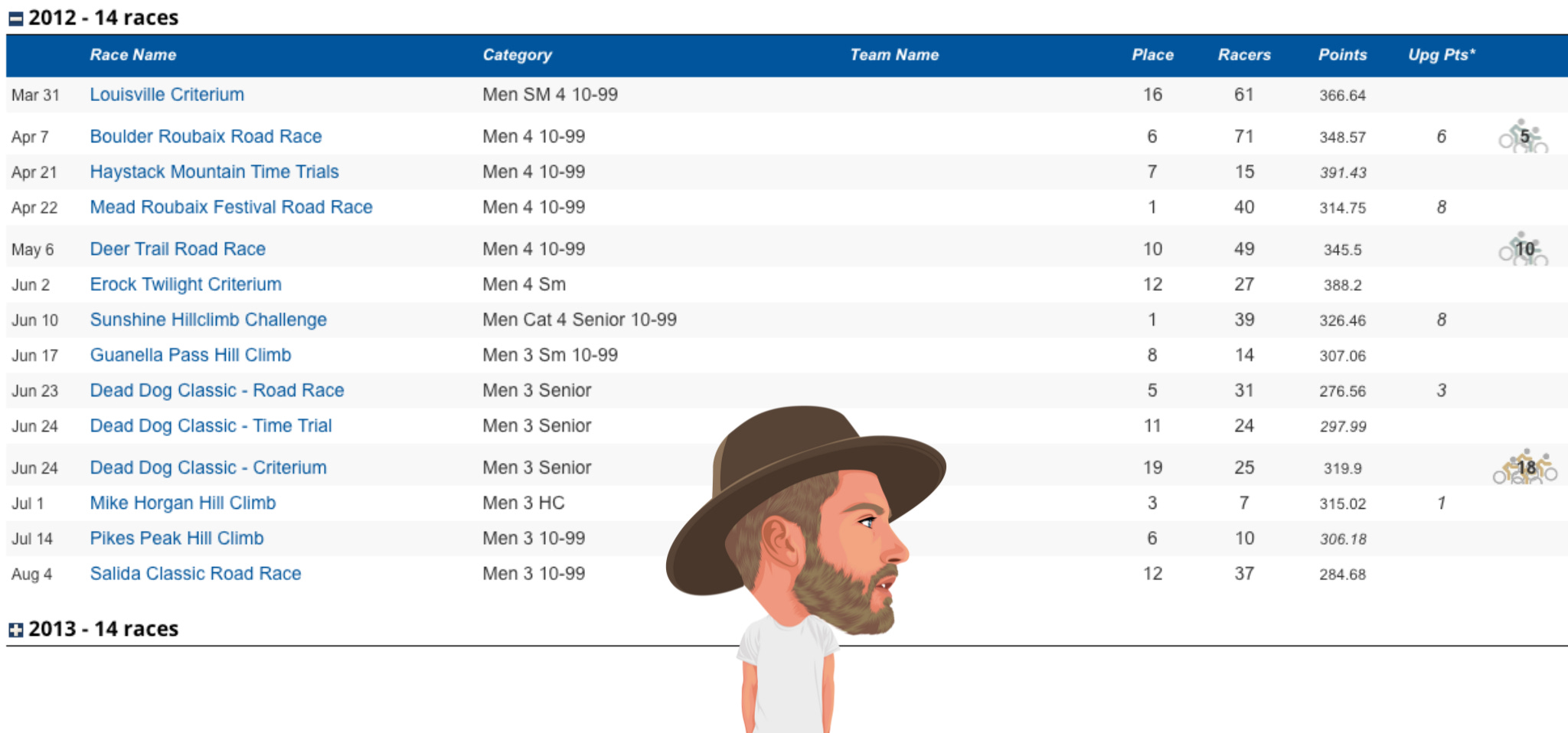
Now, you might be wondering what it looks like when you’re a promising, potentially undiscovered talent that just needs a little polishing. Well, look at my first year of bike racing.
Notice that I almost immediately got out of the Cat 4s and into the Cat 3s after curb stomping the fields twice in a road race and a hill climb, and not in an easy region of the country like the East Coast, but in a cycling mecca of Colorado. I didn’t languish in the back end of the lowest category for years; I rode away from everyone and only took a month or two before I started making people uncomfortable in the Cat 3s.
The hitch in my step, the relentless attention from sorority girls, the calls from World Tour managers desperate for fresh talent all make sense when you look at my old results.
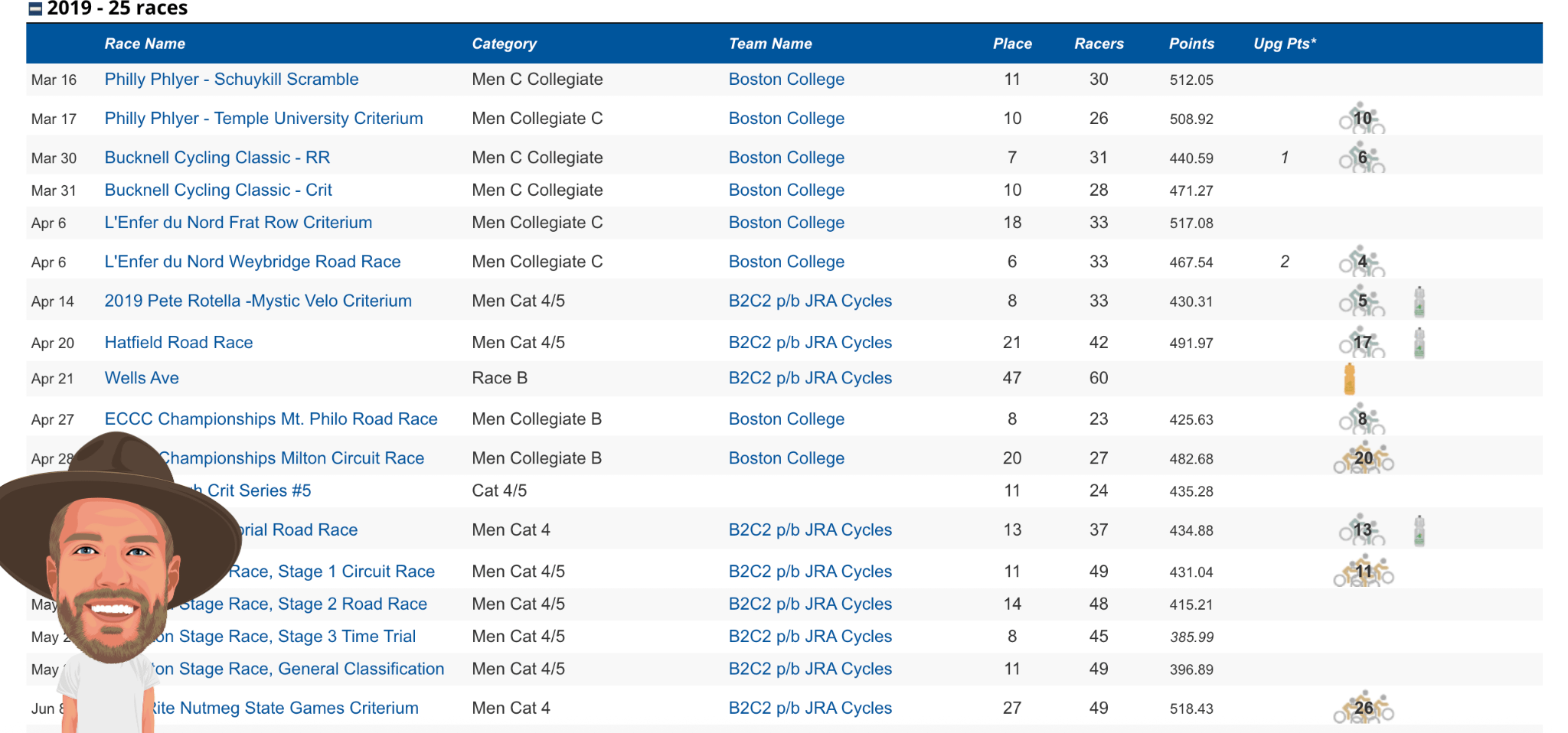
Fast forward to 2024, and Cole’s results, now in the Cat 1s at a national level, are simply jaw-dropping. It looks like, in addition to his astrophysics degree, he has a minor in biochemistry and knows how to mix up and administer his own performance-enhancing drugs, but the truth is sadly far more plain and frankly boring - the difference between his early results and later results is the result of the compounding effects of taking care of himself.
I would know. I hacked into his TrainingPeaks account and looked around, and there’s nothing in there but steady, middle-of-the-road hard work and attention to detail. There is absolutely nothing anyone could bottle up or sell for $19.95 plus shipping and handling.
Compound Cole
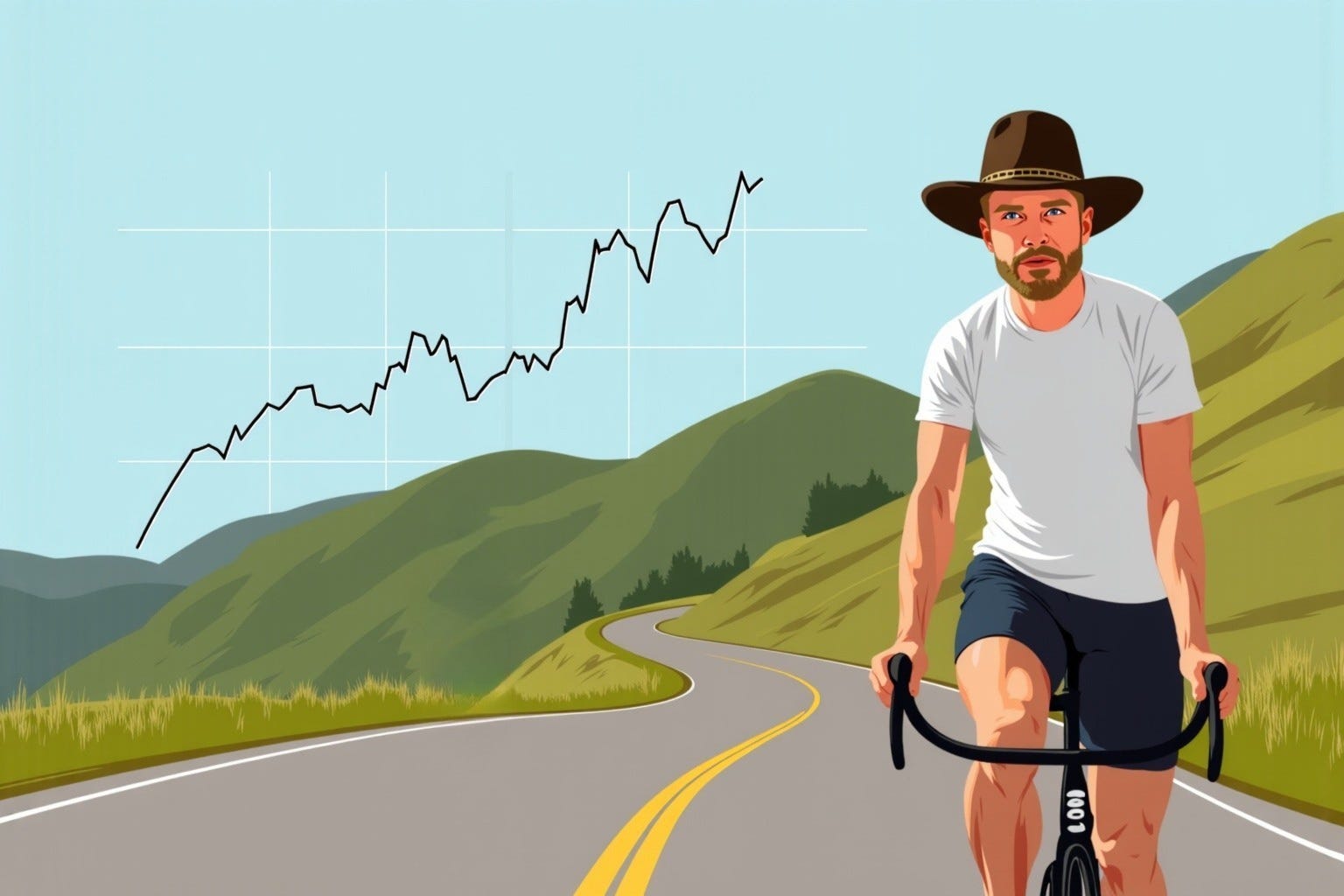
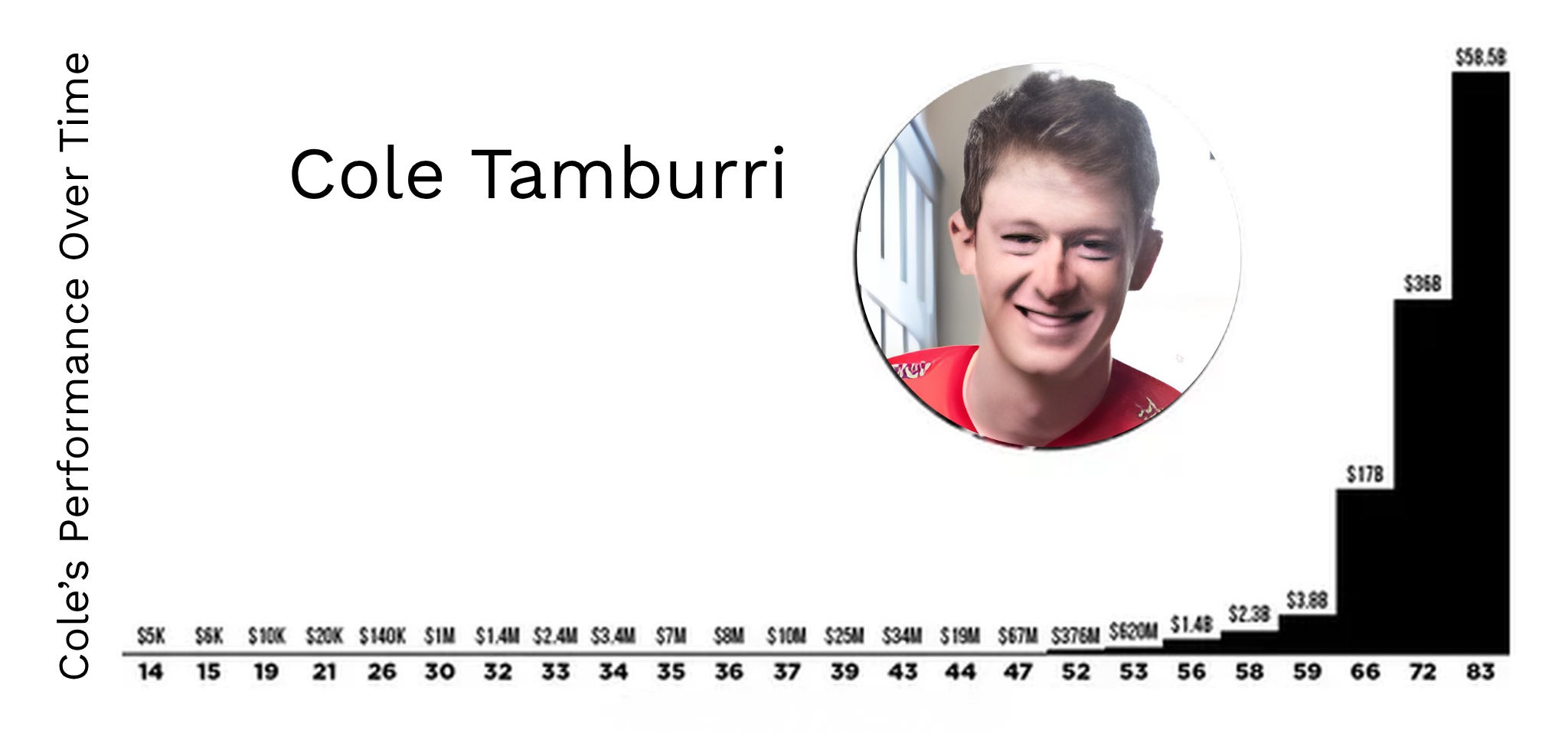
I love that graph. You probably glanced at it and quickly realized three things:
Most of Cole’s Performance gains happened in his final years.
The performance units are in money?
Cole is apparently 83 years old and still competitive at the national level in cycling?
Yeah, it doesn’t make sense because that’s a graph of Warren Buffett’s net worth over time, not Cole’s cycling performance. While the graph wouldn’t make sense without further modification, I’m tired of photoshopping things, and the point comes through without further modification - Cole’s cycling performance, like Warren Buffett’s net wealth, didn’t manifest its true potential for years. It took time before the effect of ‘just take care of myself’ visibly compounded, but when it did, well damn - he blew people away that would have never dreamed of suffering on his wheel, like certain old guys who comfort themselves with the memories of winning Mead Roubaix in the Cat 4s while they ride alone minutes behind Cole.
Look, it sucks losing to Cole, but if you can’t beat him, instead of joining him, learn from his example so that you can beat him later (next year he’s defending his PhD and will have no time to train, so it’ll be a great time to drop his ass). Enjoying compounding improvement is just a matter of consistently taking care of yourself and ignoring how terrible you are in the meantime.
Don’t share this with Cole or his friends; he’ll lose his mind.