
I sincerely apologize for the last few articles. I suggested training at the level that your goals require instead of recommending you just buy supplements. It was naïve of me to suggest your problem is that you’re not training enough when the real issue is that you’re not taking enough supplements to make up for the lack of training you’re doing. My mistake.
So what should you buy to get faster without training? Well, 6-10 things, depending on how you count. I’ll break them all down for you in reverse order while subtly hinting throughout that most of these supplements are pointless, and you’re spending hundreds of dollars a week to enrich your urine by telling you what it does, how to use it, natural alternatives, potential side effects, cost, and whether I think it’s worth it or not with an emoji ( 👍🏻 = Do it; 👎🏻=Don’t do it; 😂= sure, lol if you want to take it take it).
Throat Clearing
I’ll be quick:
This post is mostly tongue in cheek. While some supplements could probably help you a little, maybe, they’re NOTHING to your performance like training well for a long time; however, saying hard work is the answer is boring, even if it’s correct.
If you’re going to F with supplements, realistically you should get a blood test. Much like when you train you test from time to time to see if you’re improving, without regular blood tests you don’t know if what you’re taking is going to move the needle. In the absence of blood tests, you’re in danger of spending lots of money on vibes.
Some supplements are contaminated. If you’re competing and you get tested, you could get a positive test if something you’re taking contains something you shouldn’t. If this is a concern to you, then it’s YOUR responsibility to know what you’re putting in your body.
Being cynical about all supplements is idiotic. Supplements can make a difference, especially if you’re deficient in something. Moreover, thinking that something you’re taking is helping you might actually help you even if it’s not pharmacologically - that’s called the placebo effect.
As we’ll see in the next article, how you define ‘supplement’ partially determines what supplements to recommend.
As the title implies, the following supplements might be useful to improving performance. I’ve tried them all and, as you will find if you try them, your mileage will vary.
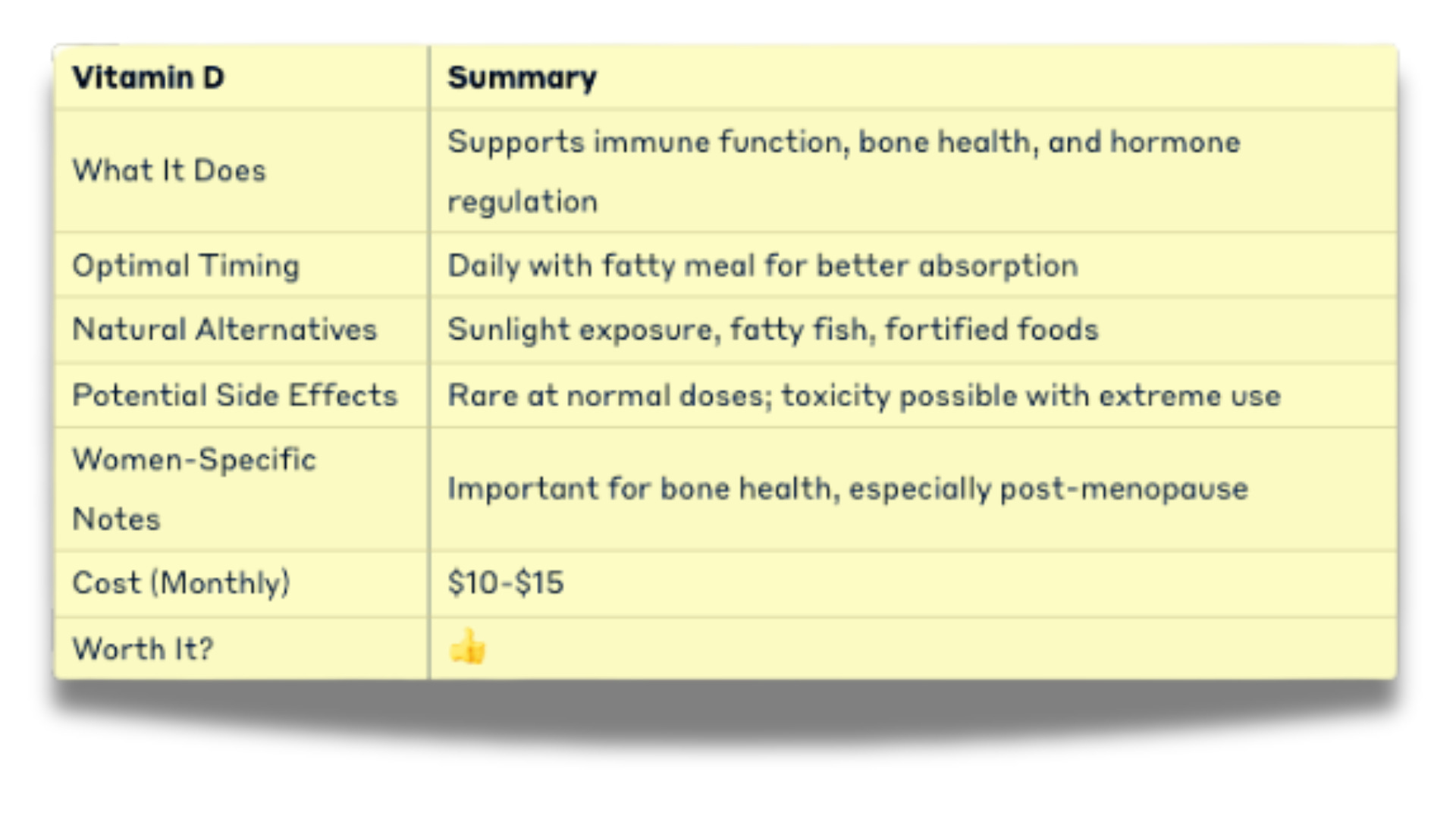
Vitamin D
According to Joe Rogan, the Pandemic revealed how many people in the winter are deficient in Vitamin D because those with lower levels of are more susceptive to infection from viruses like COVID.
Do/did I buy this? Kinda. It does make sense to me that less exposure to light and spending lots of time indoors can’t be great health. Morever, when I was in Norway and flipped on the Television they’d constantly push Moller’s Tran on you, flooding the airwaves with ads about their potent cod live oil blend which made all kids who took it above average.
What It Does: Immune support and bone health.
How to Use: 1000-5000 IU daily with a fatty meal for better absorption.
Natural Alternatives: Sunlight exposure, fatty fish, fortified foods.
Potential Side Effects: Rare at normal doses; toxicity possible with extreme long-term use.
Cost: ~$10-15/month.
Worth It? 👍🏻
Magnesium
If you’ve never heard of Magnesium, the idea of taking it sounds like complete BS. It’s not. It’s actually amazing and something I take every night before bed for the simple reason that it seems to induce a mind-bending, borderline psychedelic deep sleep that leaves me emerging from slumber like I’d been dipped in Baron Vladimir Harkonnen’s healing bath in Dune.
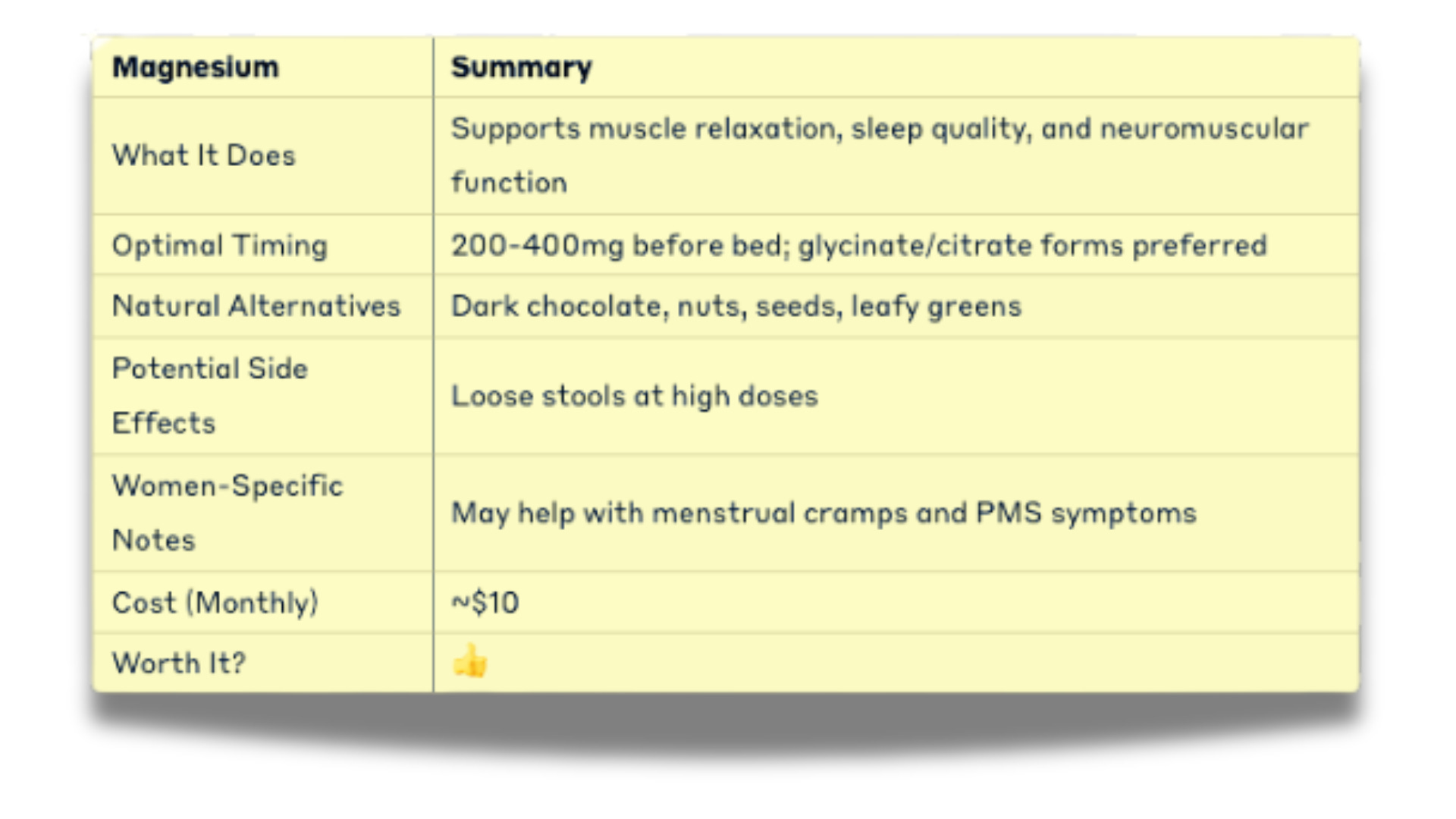
What It Does: Aids muscle relaxation and sleep.
How to Use: 200-400mg before bed. Magnesium glycinate or citrate for better absorption.
Natural Alternatives: Dark chocolate, nuts, seeds, leafy greens.
Potential Side Effects: Loose stools at high doses.
Cost: ~$10/month.
Worth It? 👍🏻
Iron
Iron can really benefit many endurance athletes who unknowingly have depleted their available tool through a combination of diet and exercise and all but guarantee that they’re response to training will be muted or nonexistent.
The problem is that you have no way of knowing unless you get blood work done. So don’t start taking it unless you get bloodwork done!
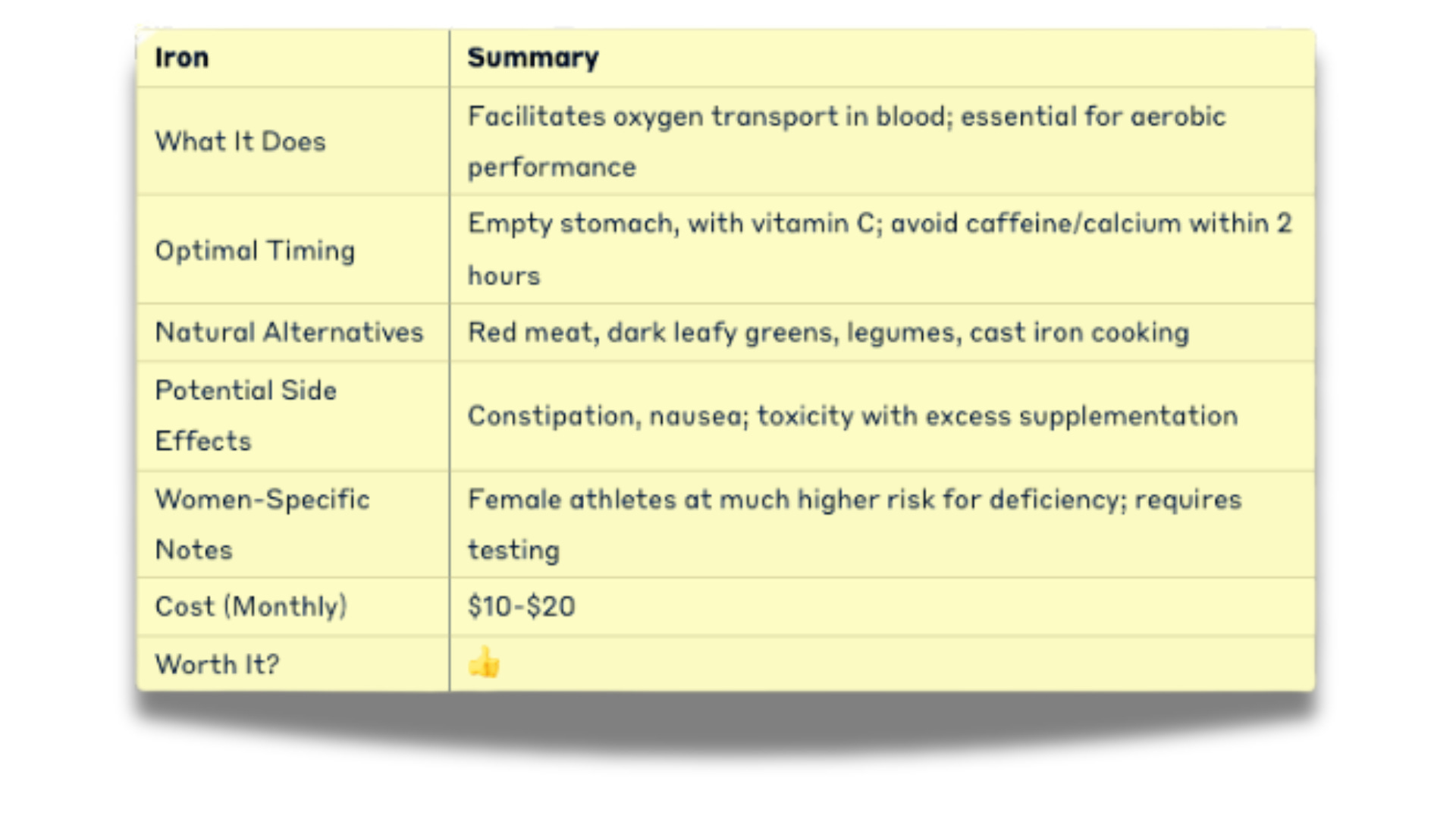
What It Does: Facilitates oxygen transport in the blood. Low iron can lead to fatigue and poor performance.
How to Use It:
Take iron supplements with vitamin C for better absorption. Avoid pairing with calcium-rich foods.
Timing Strategy:
Best absorbed on an empty stomach
Take 2 hours apart from caffeine, calcium supplements, or dairy
Split larger doses to reduce side effects
Natural Alternatives: Red meat, dark leafy greens, legumes, fortified cereals, cooking in cast iron pans.
Stacking Compatibility: Take with vitamin C to enhance absorption. Avoid taking with calcium, zinc, or tea/coffee.
Potential Side Effects: Constipation, stomach upset, nausea. Long-term excess can lead to toxicity—only supplement if levels are low.
Women-Specific Considerations: Female athletes, especially those with heavy menstrual cycles, are at much higher risk for deficiency. Regular testing is strongly recommended for female endurance athletes.
Cost: $10-20/month.
Quality Check: Ferrous bisglycinate is often better tolerated than ferrous sulfate. Get blood work done before supplementing.
Worth It? 👍🏻
Ketones
Much to my chagrin, Ketones work - they’re as effective as they are disgusting. How?
Sorry, I don’t have data to throw at you, although I do think it exists. When I’ve been on ketones I’ve:
Felt a cognitive benefit.
Felt stronger while riding.
Felt like I recovered better.
Notice I’m saying ‘felt’ a lot. All of this is subjective, which is code for ‘baseless.’
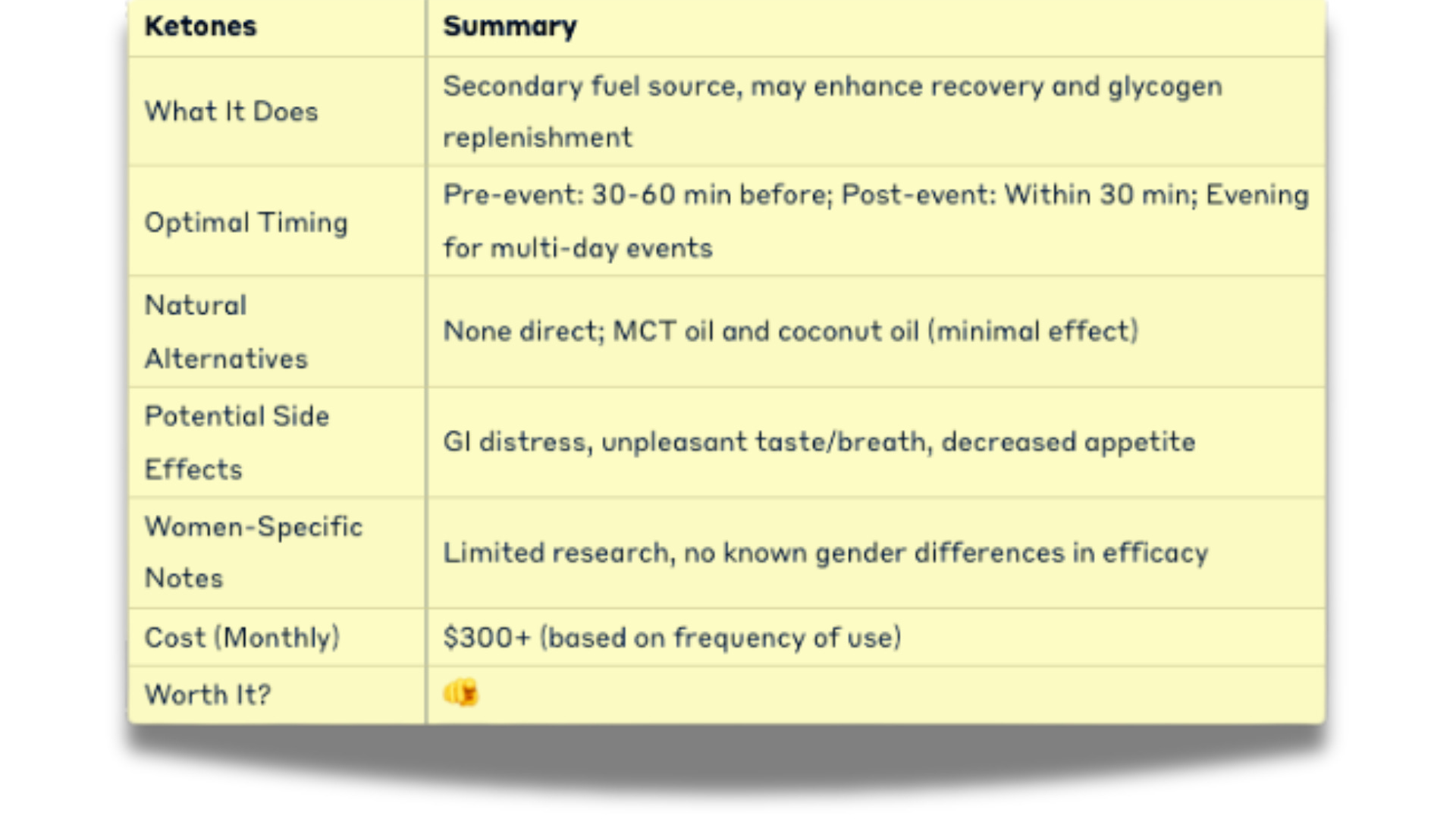
What It Does: Acts as a secondary fuel source and may aid recovery.
How to Use It:
1 dose 10 minutes post-race with a recovery shake.
1 dose 10 minutes before bedtime.
Practical Application: Use if you're chasing every last percent. HVMN and KetoneAid are top brands.
Timing Strategy:
Pre-event: 30-60 minutes before (if using as performance aid)
Post-event: Within 30 minutes (if using primarily for recovery)
Multi-day events: Evening dose may improve next-day performance
Natural Alternatives: None directly equivalent, though MCT oil and coconut oil may provide some ketogenic benefits at much lower potency.
Stacking Compatibility: It is best used with carbohydrates, not as a replacement. When combined with post-exercise carbohydrates, it may enhance glycogen replenishment.
Potential Side Effects: GI distress, unpleasant taste/breath, potential decreased appetite.
Women-Specific Considerations: Limited research on female-specific responses, but no known gender differences in efficacy.
Cost: $30-40 per dose.
Quality Check: Look for ketone esters rather than ketone salts for maximum effectiveness.
Worth It? 😂
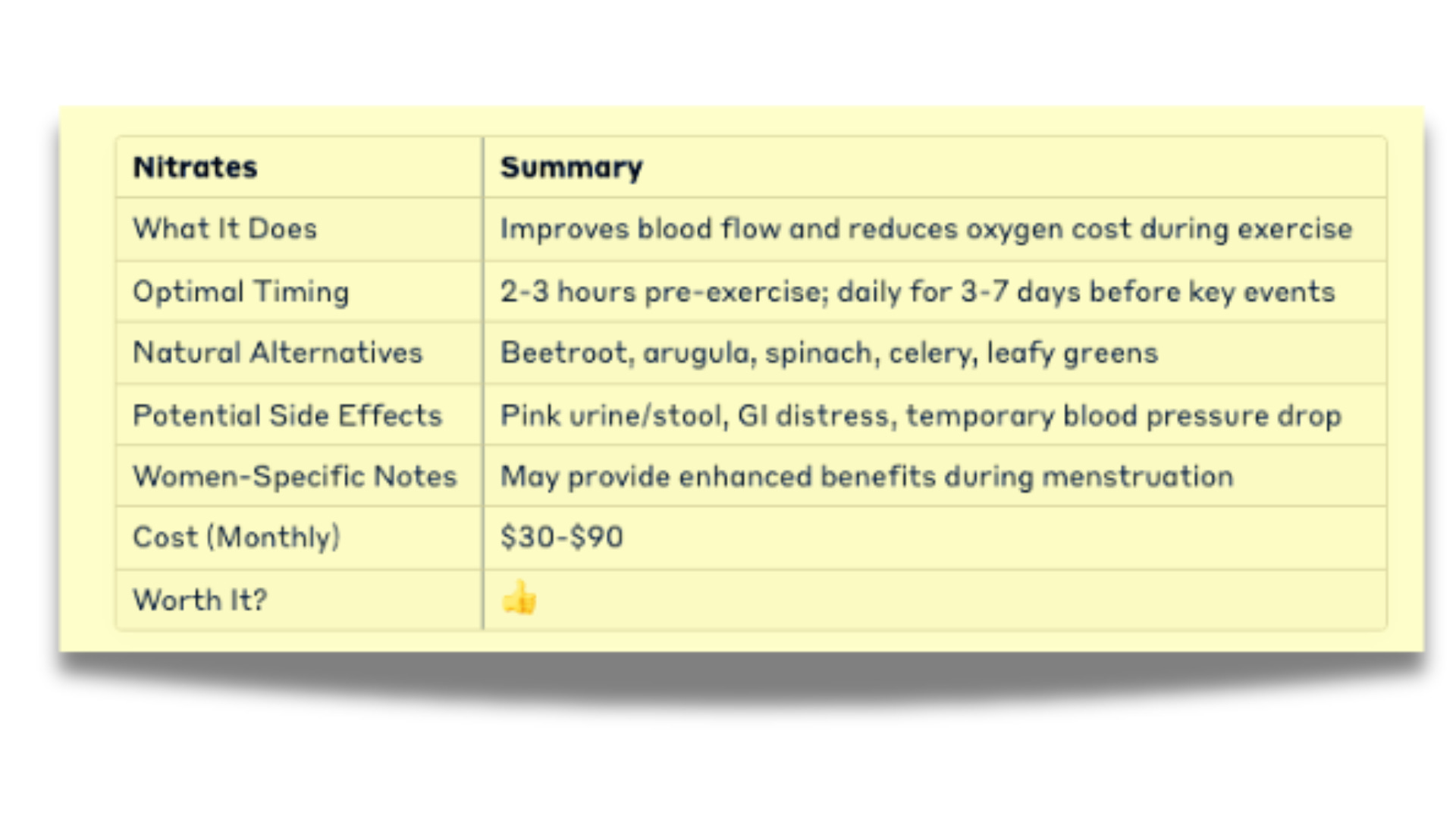
Nitrates
Who knew beets were worth consuming outside of Thanksgiving to avoid pissing off your aunt?
I admit I hit the nitrates hard, assuming I remember to take them.
What It Does: Converts to nitric oxide, improving blood flow and reducing oxygen cost during exercise.
How to Use It:
4x daily for altitude prep: 2x at breakfast and 2x at dinner.
2x at breakfast and 2x three hours before a time trial.
Practical Application: Use beet juice or concentrated nitrate shots. Brands like Beet It are reliable.
Timing Strategy:
Acute benefits: 2-3 hours pre-exercise
Chronic benefits: Daily supplementation for 3-7 days before a key event
Natural Alternatives: Beetroot, arugula, spinach, celery, and other leafy greens.
Stacking Compatibility: Pairs well with caffeine. Avoid use with antibacterial mouthwash, which can reduce nitrate conversion.
Potential Side Effects: Pink urine/stool (harmless), potential GI distress, temporary drop in blood pressure.
Women-Specific Considerations: May provide enhanced benefits during menstruation when iron levels are lower.
Cost: $1-3 per dose.
Quality Check: Look for products that specify nitrate content, not just "beet extract."
Worth It? 👍🏻
Beta Alanine
Sigh. I have a gigantic tub of these pills and sometimes dutifully chug them but while some people swear by them all they’ve ever given me is gas. That shouldn’t mean you shouldn’t try them, or that it might not benefit you, it’s just that I can’t say I’m super into it with a straight face.
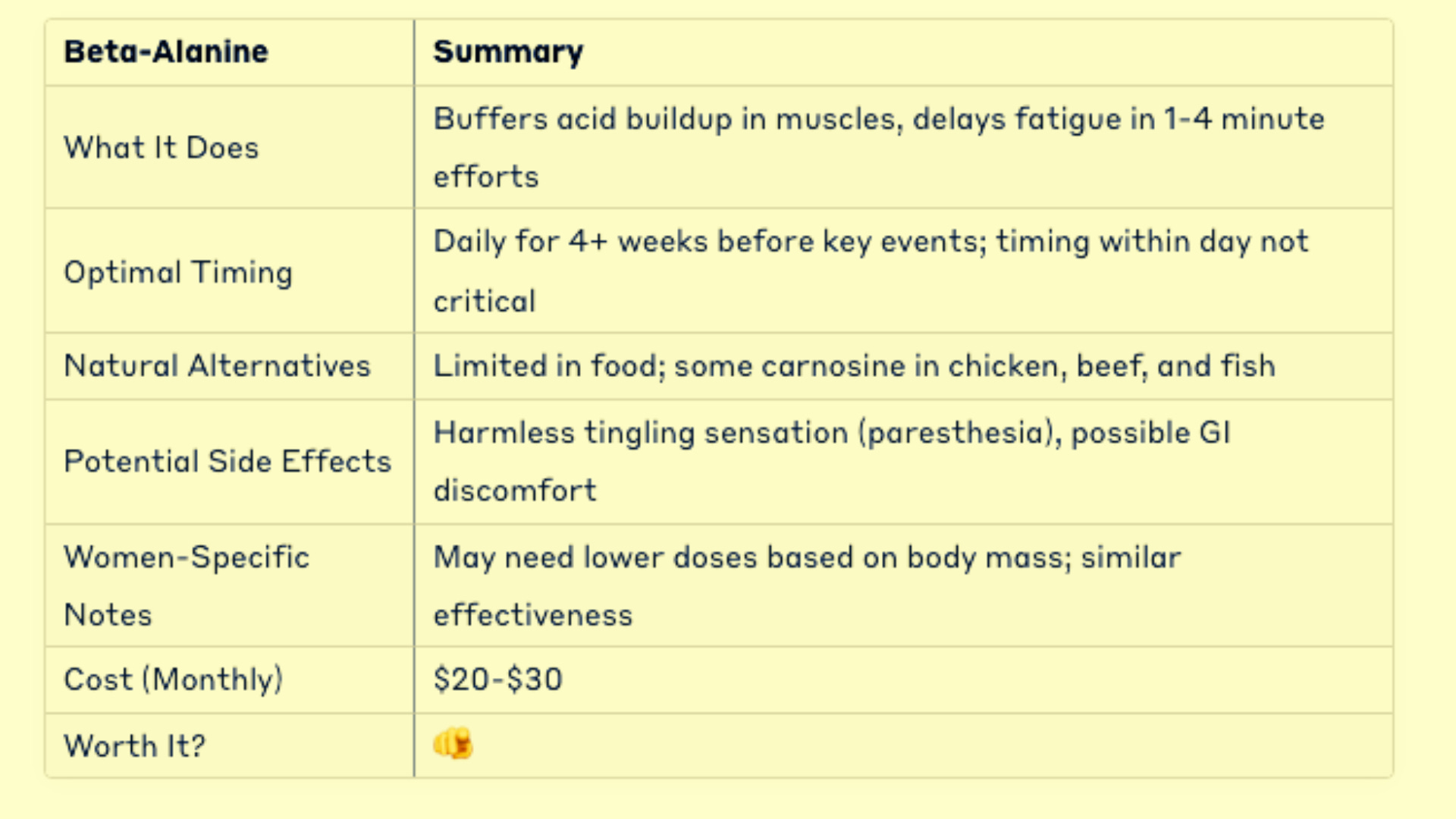
What It Does: Increases carnosine levels in muscles, reducing the burn during high-intensity efforts.
How to Use It:
Loading Phase: 3x2 capsules per day with meals for 4+ weeks.
Maintenance: 1x2 capsules daily.
Practical Application: Use capsules for precise dosing. Don't expect instant results—it's a long game.
Timing Strategy:
Spread doses throughout the day to minimize the tingling sensation
Consistent daily use is more important than timing around workouts
Plan to start loading 4-6 weeks before key events
Natural Alternatives: Chicken, beef, and fish contain some carnosine, but direct food sources of beta-alanine are limited.
Stacking Compatibility: Works well with creatine and sodium bicarbonate. No known negative interactions with other supplements.
Potential Side Effects: Harmless tingling/flushing sensation (paresthesia), possible GI discomfort.
Women-Specific Considerations: May need slightly lower doses based on body mass, but effectiveness is similar across genders.
Cost: $20-30/month.
Quality Check: Choose pure beta-alanine; avoid proprietary blends that don't disclose specific amounts.
Worth It? 😂

As the title implies, these supplements I consider so effective, easy to administer, cheap that if you don’t take them I seriously question your commitment to performance.
Creatine
You think you have baggage because from online dating - just imagine how creatine feels.
Long the supplement for body builders and meat heads, this indisputably beneficial and economical performance enhancer that for some reason has been conflated with steroid use and other PEDs is underutilized by cyclists.
Why? Because initially it induces weight gain due to water retention Given that weight gain is a cyclists greatest nightmare, they don’t use it, which is too bad because for many cyclists it boosts their cognition, improves recovery, and enhances short duration power.
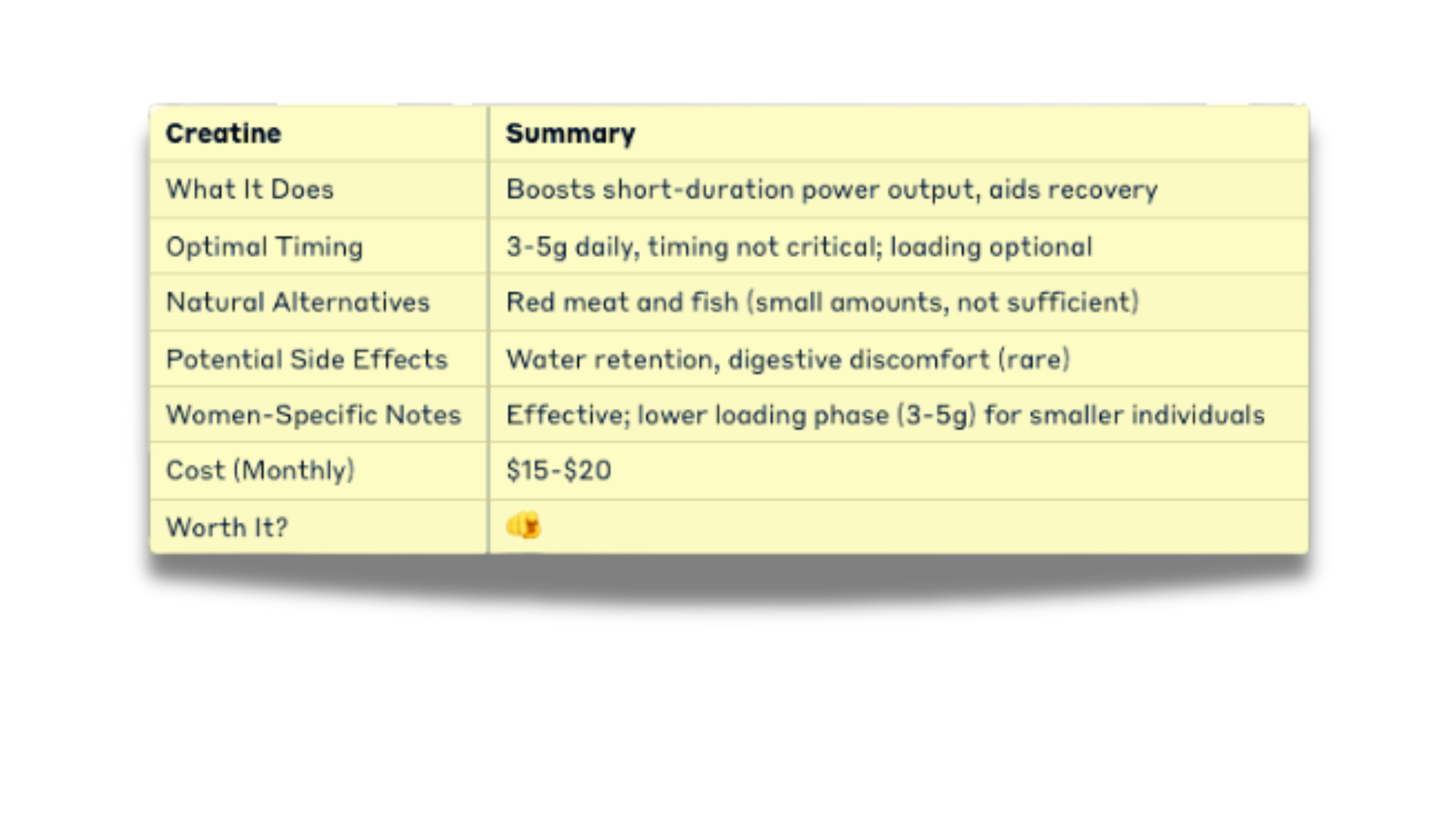
What It Does: Boosts short-duration power output and aids recovery.
How to Use It:
5g daily, mixed with water. Stick to monohydrate for simplicity and cost.
Timing Strategy:
Consistent daily use is more important than timing.
Loading phase (optional): 20g/day (split into 4 doses) for 5-7 days.
Maintenance: 3-5g daily, can be taken at any time.
Natural Alternatives: Red meat and fish contain small amounts but not enough for performance benefits.
Stacking Compatibility: Works well with beta-alanine, protein, and carbohydrates. Take with carbs for enhanced uptake.
Potential Side Effects: Water retention, digestive discomfort (rare), and potential kidney stress with pre-existing conditions.
Women-Specific Considerations: Effective for women, though the loading phase may be adjusted to 3-5g for smaller individuals.
Cost: $15-20/month.
Quality Check: Choose plain creatine monohydrate—the most researched form. Look for Creapure® certification.
Worth It? 👍🏻
Caffeine
Cyclists ride to coffee shops for a reason - caffeine improves performance - and no, it’s not up for debate. Caffeine’s effects have been studied exhaustively for decades and the evidence is dispositive - 200-300 mg an hour out from the start of pedaling while make you better.
But maybe you despise coffee because you’re a communist - idk! That’s fine - take it in other forms then. Just forgo the performance benefits because you can’t stomach a little brown water.
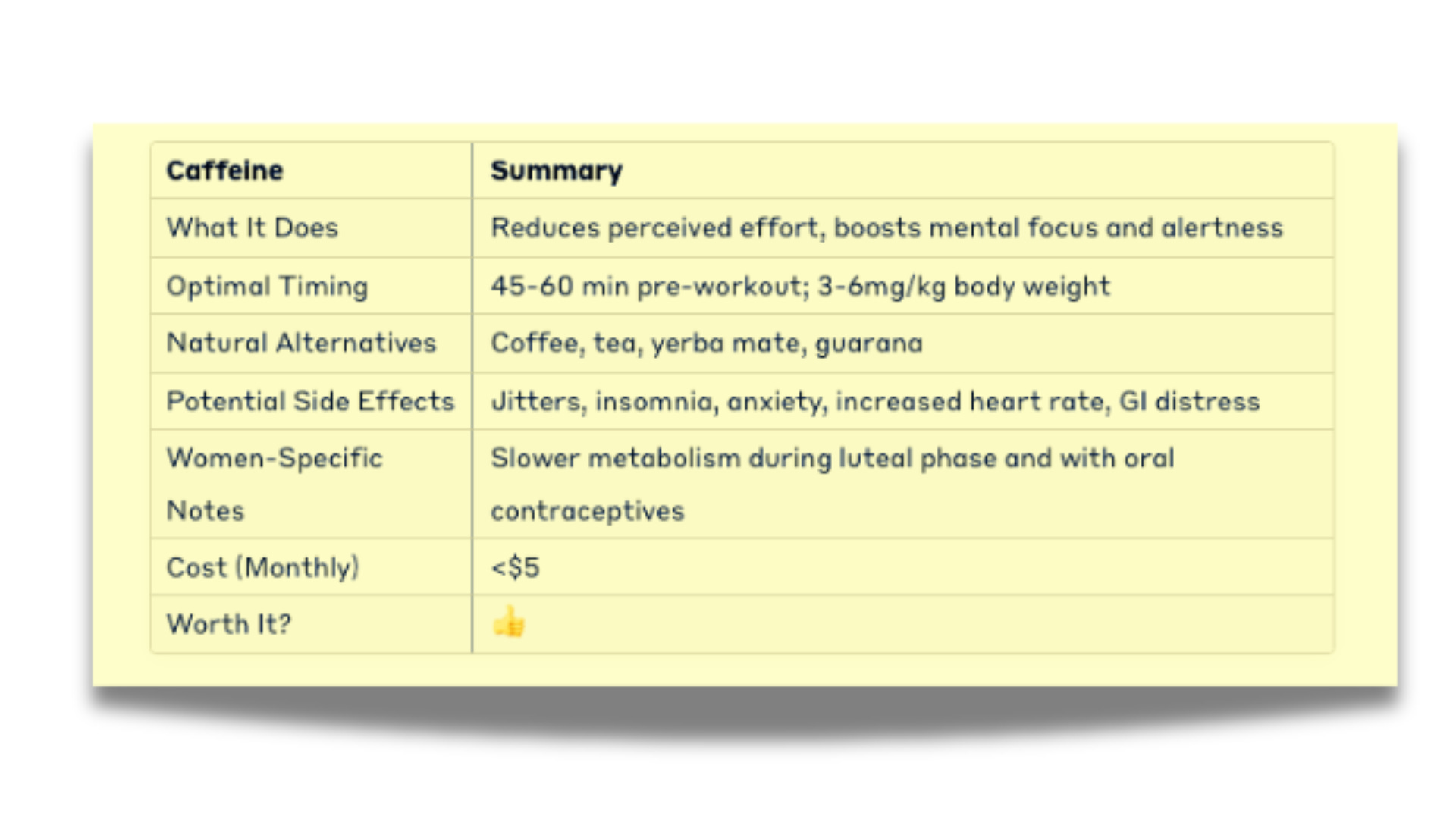
What It Does: Stimulates the central nervous system, reducing perceived effort and boosting focus.
How to Use It:
1 hour before the start, dose at 3-6mg/kg body weight.
Practical Application: Caffeine pills are the easiest, most precise option. Coffee works, too, but can vary in strength.
Timing Strategy:
High-intensity workouts: 45-60 minutes pre-workout
Long endurance events: Initial dose pre-event, with potential small doses (1-2mg/kg) every 2-3 hours
Avoid late-day use if sleep is affected
Natural Alternatives: Coffee, tea, yerba mate, guarana.
Stacking Compatibility: Works well with carbohydrates and nitrates. May amplify the effects of beta-alanine.
Potential Side Effects: Jitters, increased heart rate, insomnia, anxiety, GI distress, and potential dependence (LMAO).
Women-Specific Considerations: Women may metabolize caffeine more slowly during the luteal phase of the menstrual cycle and while using oral contraceptives.
Cost: Pennies per dose.
Quality Check: Simple caffeine pills are generally pure; no need for fancy formulations.
Worth It? 👍🏻
Conclusion
There you have it. That information should help you blow hundreds of dollars and hours of your time carefully ingesting loads of supplements without any guaranteed, objectively demonstrable performance benefit.
Next post I’ll talk about a few other supplements you might consider in your search to get faster without training better.
Thanks for reading Slow, Mid, 38s! This post is public so feel free to share it.