If you haven't started supplementing your workouts with carbs and caffeine by this point, do us both a favor and stop reading my shit - I can't reach you and, absent a night of 🍄, no one else will either.
So, what supplement is left that I haven't mentioned? Well, something I haven't touched on would result in charges of coaching criminal negligence if I didn't mention it—sleep.
Sleep?
Yes, sleep.
Sleep fits in perfectly with my current working definition of supplements - something that completes something else; it's just overlooked because most people typically don't see sleep as something necessary to adapt to training - until they overdo it and their body goes to shit - but mostly see sleep as a burden, a grotesque, cruel feature of biology whereby we disconnect from reality, stop forming memories, stop moving, etc. and lay there for seven to ten hours every day recuperating from the previous day.
If this never struck you as strange, it's because you're not paying attention. As I mentioned in a previous post about time (and the lack of it), you will spend a 1/3 of your life horizontal in a non-optional hormonally regulated anabolic state required for neurological pruning, endocrine calibration, muscular repair, immune modulation - you name it - with no conscious effort required on your part, which is ultimately responsible for the maintenance of every biological function that sustains performance, health, and vitality.
Sleep is old—very old. What I mean by that is that sleep isn't some sort of recent evolutionary adaptation that only manifests in humans; it's a biological function shared by every creature in the animal kingdom. If you've spent your late-night entertainment watching a nature show, you'll probably completely overlook that every animal you see sleeps in some manner, even without a central nervous system (like jellyfish). Birds sleep mid-flight (wtf)- because it's necessary for survival - if it weren't, you wouldn't see it.
And have you ever thanked sleep? Of course not. In fact, you've probably spent most of your life resenting the interruption, joining others in saying nonsense like, 'I'll sleep when I'm dead,' generally doing your best to mimic the sleeping hygiene of a zombie. Well, after this article, perhaps you'll stop being so obtuse, straighten your life out, and stop sleeping like you're a nurse pulling an overtime shift.

Bryan Johnson
If you haven't seen Don't Die yet, stop what you're doing, hop on Netflix, and watch it. I'll see you in 90 minutes.
[elevator music]
Bryan sure is a nut, huh? Mormons really are built different.
Whatever your reaction to the documentary 'Don't Die,' if your instinct is to dismiss everything Bryan does as insane and not worth consideration, I strongly suggest you remove the baby from the bathwater before throwing anything out.
What's the metaphorical 'baby' here? Sleep.
Didn't you find it fascinating that of ALL the things BJ does to slow his rate of aging, sleep appears to be the most important?
Remember, BJ has unlimited resources. While the lengths to which he will go (borrow blood from his son), what he'll measure (boners, lol), and the resources he has at his disposal (millions) are extreme, arguably his most crucial age-defying weapon is his sleep quality. That should keep you up at night.
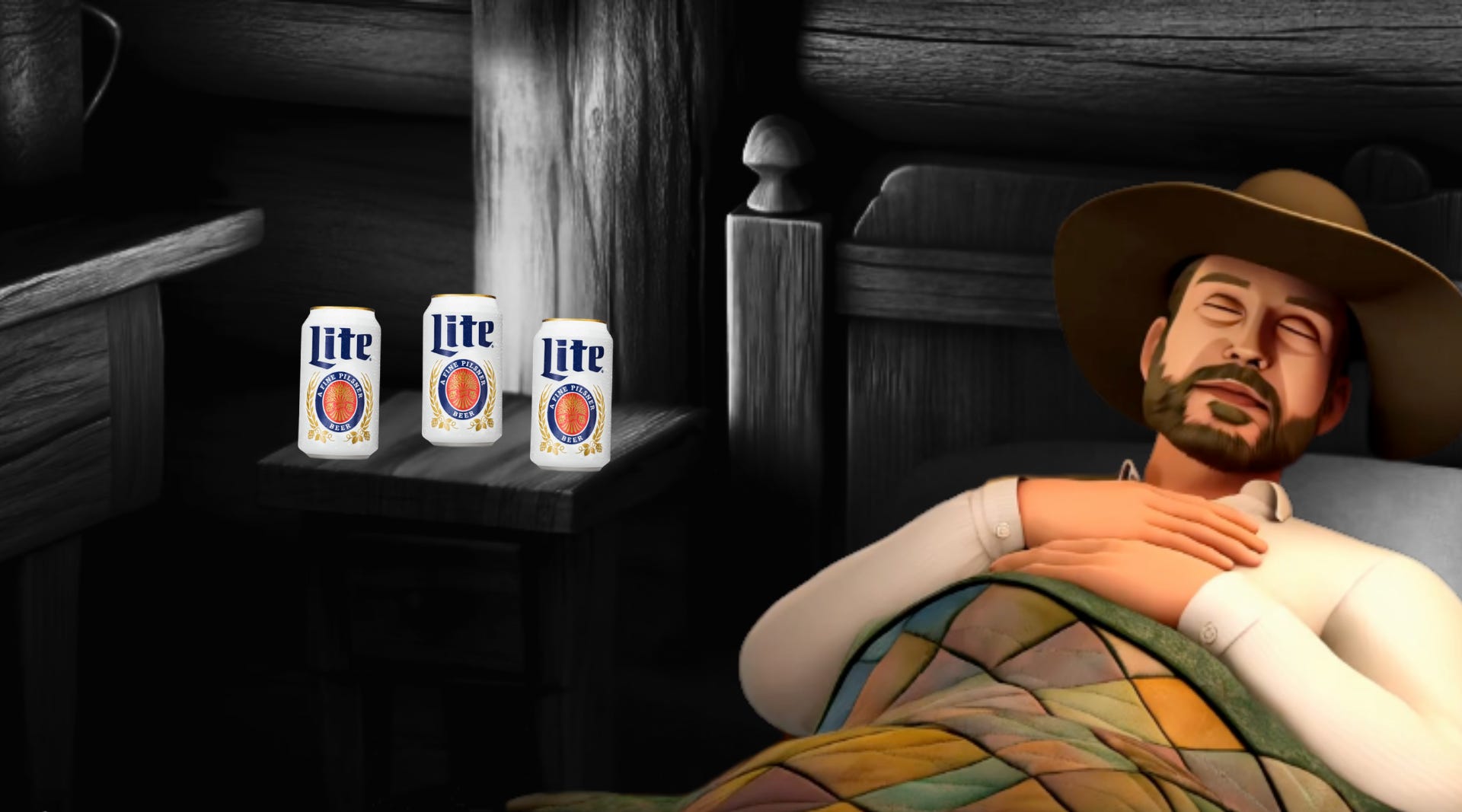
"Being sleep-deprived is like being drunk."
I'm not sure how I manage to reference Miller Lite in every post, but here we are again.
At one point, BJ is being interviewed, and they're discussing sleep. He mentions that being sleep deprived is like being drunk - you're literally cognitively, emotionally, and physically impaired - yet we not only accept that societally but venerate people who 'sleep when they're dead.'
BJ did just that for years when he went into 'founder mode' with the company that made him a millionaire and allowed him to spend more on supplements, medical-grade devices, and other treatments to slow or reverse his aging so he never dies. However, according to his social media feeds, one of his greatest regrets is all the sleep he forfeited, which allowed him not to forfeit sleep now. Ignore the contradiction, please.
Setting hypocrisy aside, BJ is correct - you have no hope of being your best if you buy into the hustle cult of the 'I'll sleep when I'm dead' crowd. I'll go as far as to say that when you cut corners on your sleep, you're making a silent agreement to let your life slowly fall apart:
Muscle repair slows.
Hormones disregulate.
Nervous system jacks.
Cognition fragments.
Energy tanks.
And what is most people's plan to compensate for that?
Stimulants. Lots and lots of stimulants, most of which come in cans, all of which are different kinds of expensive and awful and don't really make up for the sleep you didn't have.
And for what? You meant to spend a few extra hours at work, exercising, doing chores, but really you just doomed scrolled.
Slow, Mid, 38s is a reader-supported publication. To receive new posts and support my work, consider becoming a free or paid subscriber.
Sleeping is Training
I propose a mindset shift: If you want to get the most out of your training and adapt maximally, you need to view sleep as a workout.
If this makes you want to edge away and run for the exit, I understand entirely. Realizing that sleep was so important to performance that I might as well view it as a workout itself was a very cold shower for me, as I'm sure it is for you.
Why?
Because you can't separate the efficacy of your training from the rest of your life. Unfortunately, you don't get to do your workout perfectly, sleep for five hours that night, and look yourself in the mirror and say, "I did everything I could." Well, you can, but you're just lying to yourself to make yourself feel better, which isn't something you should be proud of and would disappoint your mother.
Doing a perfect workout and then sleeping for five hours is like skipping a third of the intervals of the workout—you're spinning your wheels. What everyone forgets about spinning their wheels is that while it's happening, it feels like you're doing something; it takes a lot of effort, but no matter how far you stomp that gas pedal, the car (your fitness) doesn't move at all.
Sleep Hygiene
Much like wiping, showering, combing, and brushing, you can learn a known set of sleeping practices that will make you acceptable to yourself and society, collectively called 'sleep hygiene.' We can grossly complicate this, but instead of flooding this article with suggestions that sound like I cribbed from a horoscope, I'm going to tell you what to do by telling you what not to do:
Don't go to bed at a different time every night.
Don't go to bed so late that you have no chance to sleep 8+ hours.
Don't eat right before, or even within a few hours of, going to bed.
Don't drink alcohol and expect your sleep not to be shit.
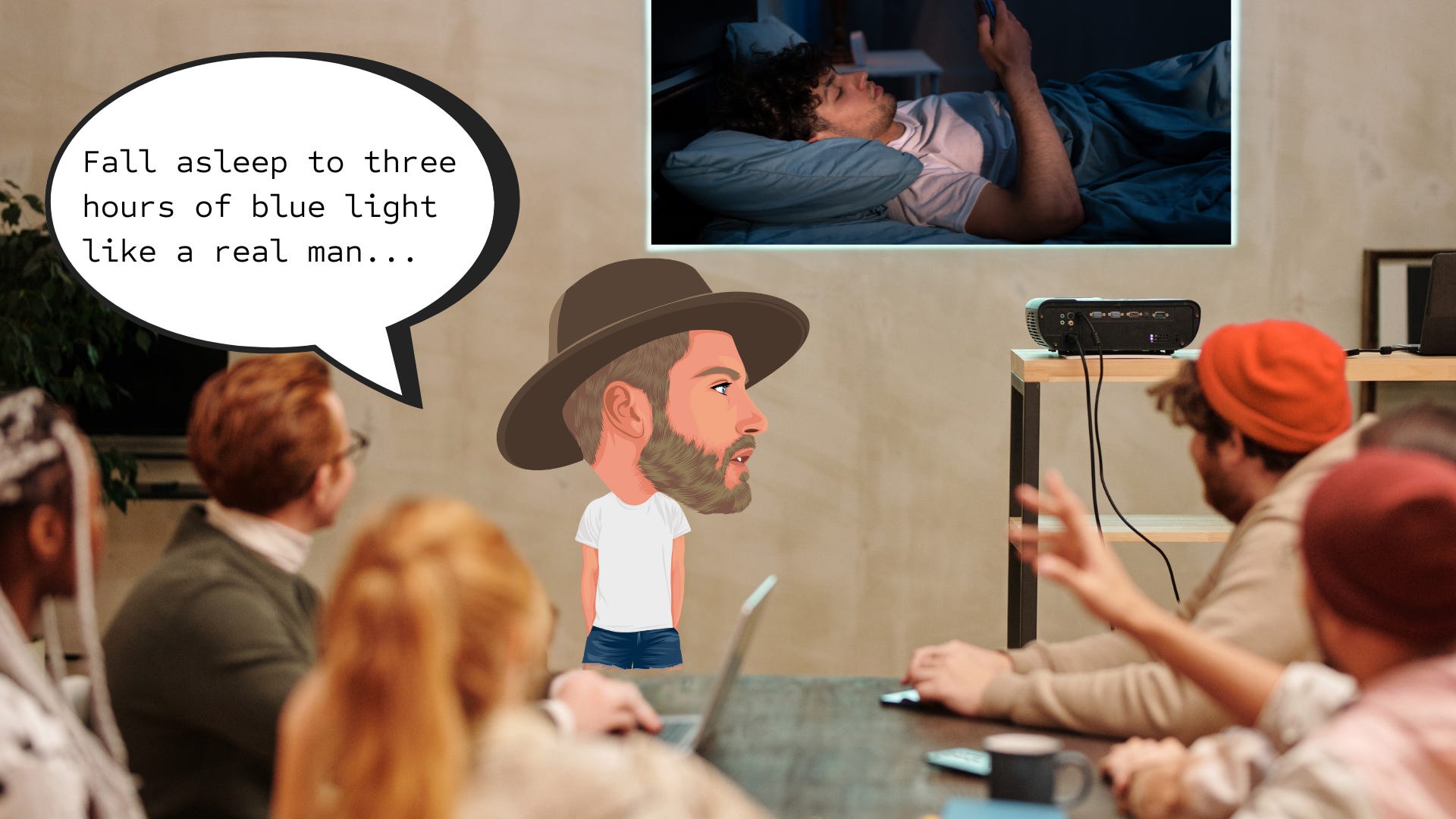
Don't fall asleep while looking at a glowing blue screen filled with the most interesting, algorithmically determined content on the planet, unless you're a real man.
Don't turn the heat up in your room because someone told you you could get in your heat training while sleeping.
Don't fill your room with light so your brain thinks you live in some hell hole like Norway between June and August when the sun never goes down.
And if you don't do all that, what have you accomplished?
You've successfully slept optimally for one night! Congratulations - now do it again for the rest of your life spent trying to race bikes fast or for the period of time you care about your well-being and consistently showing up as your best self, not a brain-dead, hungover corpse, mostly wasting the oxygen they breathe.
But How Do I Know If It's Working?
Heart rate variability (HRV).
HRV is the natural variation in time between heartbeats that arises from the influence of the autonomic nervous system (ANS), the part of your nervous system you don't have control of.
The ANS has two branches, the sympathetic 'fight or flight' and the parasympathetic 'rest and digest.' which exerts a push and pull that manifests as the time between heartbeats. When the parasympathetic branch is strong, and recovery is going well (because you're not sleeping like an asshole!), HRV is high or variable. When the parasympathetic branch is weak, and recovery is shit (because you're sleeping like an asshole!), HRV is low or less variable.
I know—probably the last thing you want as an athlete is more numbers, but unfortunately, as much as I want it to be, HRV is not a made-up number that doesn't mean anything. HRV is an excellent indicator of an athlete's ability to recover, especially from high-intensity training (between aerobic and anaerobic thresholds) - the higher it is, the better the athlete responds. If you're serious about your training, you'd probably benefit by tracking HRV and trying to maximize it by not treating your body like a pinata.
And before any of you come at me with studies, sources, or personal anecdotes trying to debunk the validity of HRV as a powerful, helpful indicator of recovery and readiness to adapt to training stress, the exit is behind you. Don't let the door hit you.
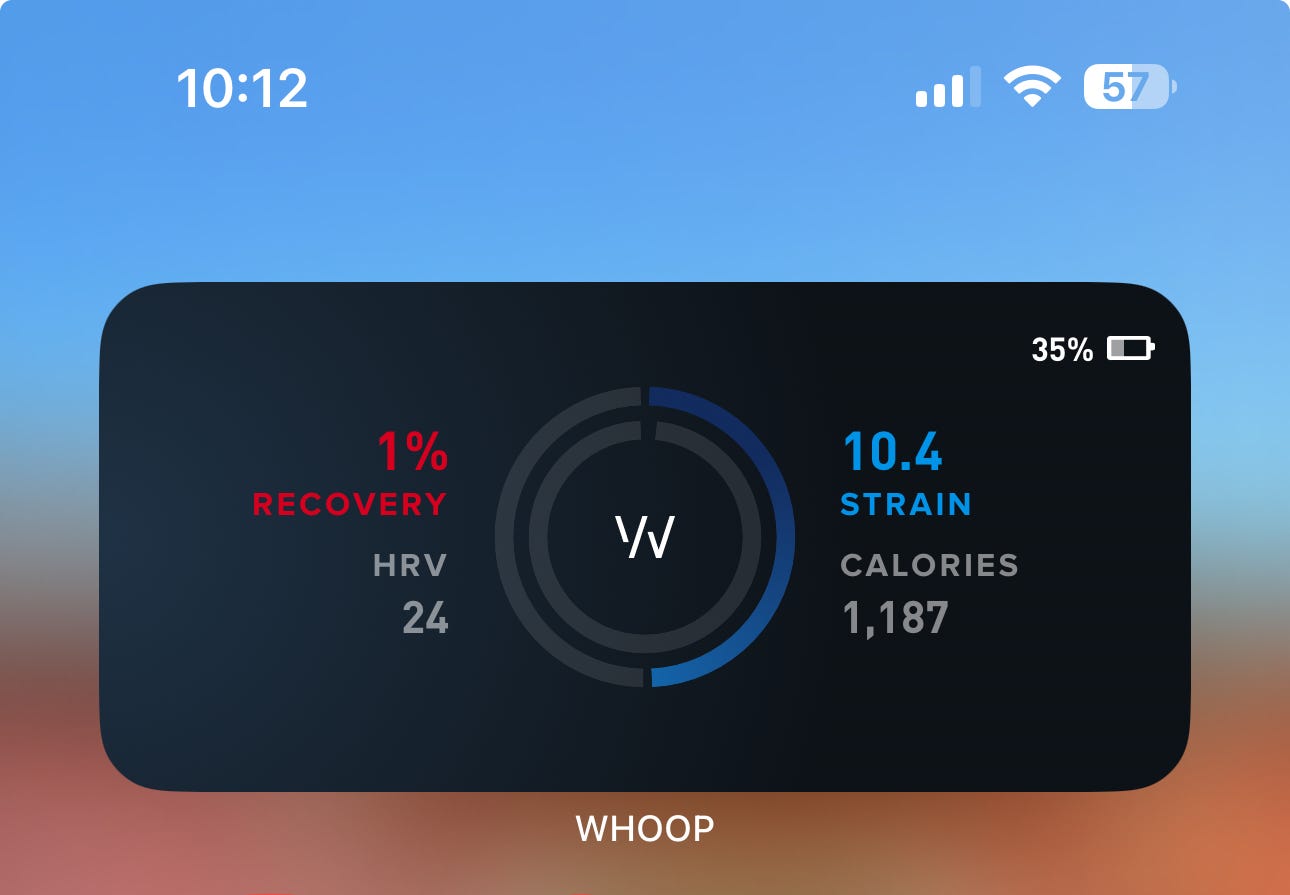
I have used many different apps to measure and record HRV for over seven years at this point. I can say with confidence that even devices that are garbage at taking measurements and are generally frowned upon, like WHOOP, remain directionally correct and are far more helpful than the smug expressions of HRV truthers who will tell you to 'trust their vibes' while they add a couple of drops of Ivermectin to their morning coffee and tell you about all the great races they had back in 2014 when they were dunking on everyone at the local charity fun run.
Even if WHOOP is low-key shit, every time I woke up and saw a horrifying, basement-level HRV number outlined in red font, it wasn't picking up noise; it was picking up something valid. Like the ten beers I had the night before. Or that fight with my wife. Or general substance abuse for the last five years of my life I've somehow been able to sustain on five hours of sleep. Or the crippling effects of back-to-back VO2 max workouts followed by a recovery shake of nothing.

Data Without Action is Still Valuable
Actually, I entirely disagree with that headline - data is only really worth recording if it informs action. Without the action, you're just engaging in some form of masturbation using endurance data slop.
However, I'm not editing that headline because I do think that if you collect data and don't act on it immediately, it's still valuable if you eventually act on it, and once you start measuring and recording HRV, eventually, when you see your numbers dip below baseline it's going to bother you, and you're going to straighten out your life and try to stop your HRV from tanking by sleeping better so that all of the time and effort you put into training isn't worthless and you can finally perform at a level that partially redeems everything you've given up to wear tight clothing and ride from point A to point B slightly faster.
Thanks for reading Slow, Mid, 38s! This post is public so feel free to share it.